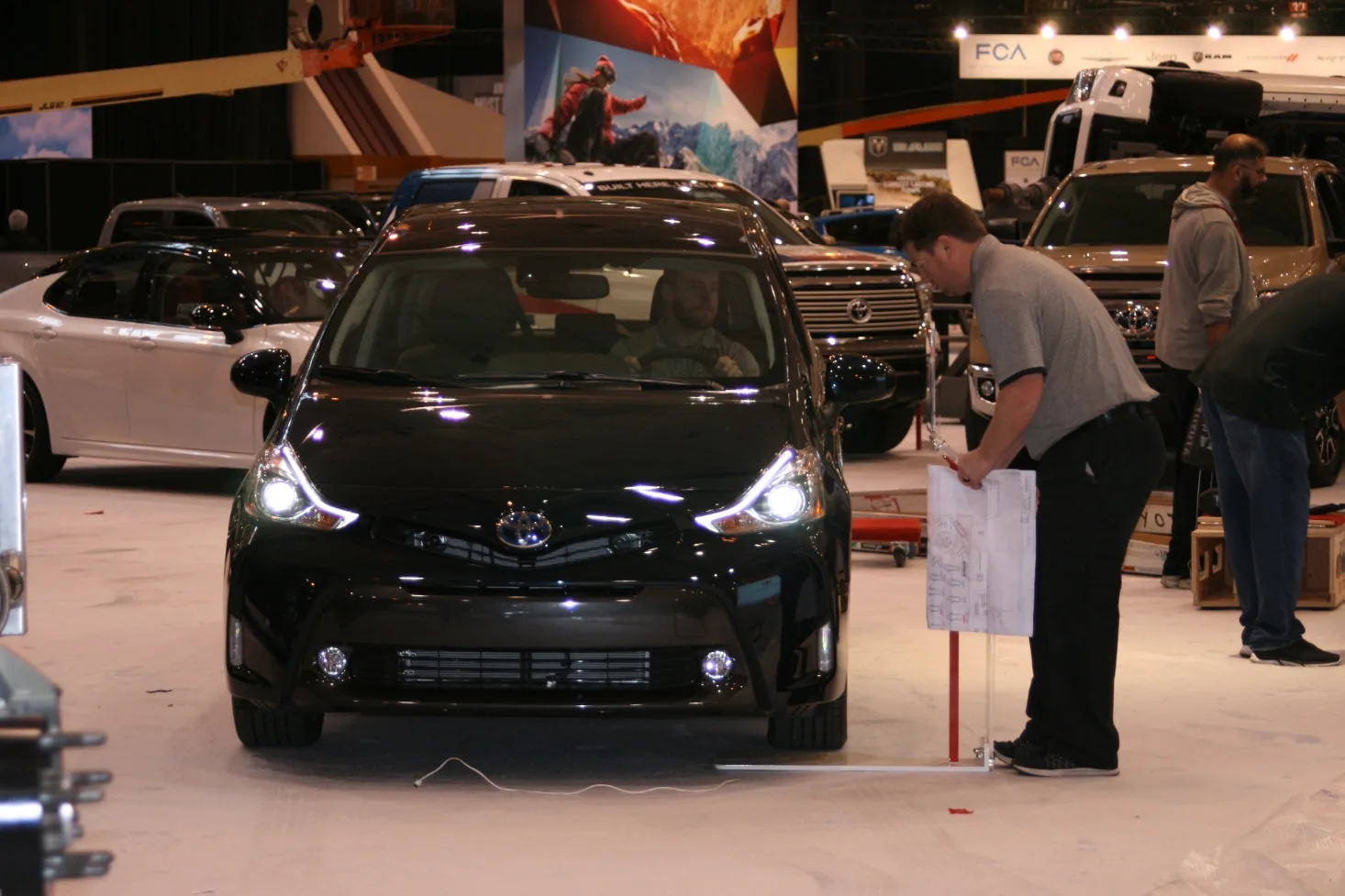
Ask anyone who has run an auto show stand what the worst move in day sounds like and you will hear the same story: the vehicle is at the door, the hall is open, the exhibit house is waiting, and the vehicle is refused because it does not meet the venue's rules. Most of the time, the problem is fuel.
Most convention centers and exhibit halls have a gas level requirement before a vehicle can enter the building. At ShowFleet we prepare display vehicles for those rules at shows nationwide, and this guide explains what the rules are for, what usually gets checked, and how to plan so your vehicles pass the first time.
Why venues limit fuel
A convention hall full of vehicles, people, lighting and electrical displays is a fire safety environment. Fuel in a tank is a fuel load. Limiting how much is in each vehicle reduces risk, and sealing the tank keeps it from being opened during the show. Fire marshals and venue safety staff enforce these rules, and exhibitors agree to them in the exhibitor manual.
What usually gets checked
Rules differ by venue, by fire marshal and sometimes by show, so always read the current exhibitor manual. The items we see most often are:
- Fuel level. A maximum level in the tank, often stated as a fraction of a tank or a number of gallons. The exact figure is set by the venue and show management.
- Sealed gas caps. The cap locked or taped so it cannot be opened.
- Disconnected batteries. Battery cables disconnected and taped so the vehicle cannot start.
- Leaks. No fluid leaks onto the hall floor.
- Keys. Keys controlled and not left in vehicles.
Electric and hybrid vehicles may have their own requirements for state of charge and battery handling. Check the current exhibitor manual and plan those units with show management in advance.
How to prep vehicles so they pass
1. Get the rules early. Pull the exhibitor manual as soon as you have your space. Note the fuel rule, the battery rule, and the move in times for vehicles, which are often separate from freight.
2. Plan fuel from the start. If vehicles are driven to the venue or to a staging yard, plan the last fill so they arrive near the limit. If they are trucked in, check the level on arrival.
3. Defuel safely when needed. Removing excess fuel is a job for people with the right equipment and experience. We have the knowledge and expertise to safely remove excess fuel so each vehicle can enter the hall.
4. Seal and disconnect before the door. Seal gas caps with a lock and key or tape, then disconnect and tape the battery cables. Do it at staging, not in the aisle.
5. Keep a log. Record each vehicle by make, model, color and last 4 of the VIN, with its fuel status, cap and battery check. If an inspector asks, you have the answer in seconds.
6. Reverse it at move out. Reconnect, unseal and add fuel as needed so vehicles can be driven to the carrier. Plan fuel for move out night ahead of time, because the hall clears fast.
Common mistakes
- Trusting last year's manual.
- Filling up on the way to the venue.
- Disconnecting the battery but forgetting the keys in the vehicle.
- Leaving prep to the move in window, when the aisle is crowded and the clock is running.
- Not planning how vehicles get fuel again at move out.
Where this applies beyond auto shows
The same rules apply to construction equipment at shows like World of Concrete, RVs and trucks at dealer shows, and fire apparatus at industry expos. Bigger units carry more fuel, so planning matters even more.
Frequently asked questions
Why do convention centers limit fuel in display vehicles?
Fuel in vehicle tanks adds fire risk inside a crowded hall. Venues and fire marshals limit fuel levels and require sealed caps to reduce that risk.
Who sets the fuel limit for a show?
The venue and the local fire marshal, communicated through the show's exhibitor manual. It can vary by venue and year.
What happens if a vehicle is over the limit?
It can be refused entry until fuel is removed, which can delay your move in and your exhibit build.
Do I need to disconnect the battery too?
Many venues require it, and it is good practice either way, because it prevents the vehicle from starting or rolling during the show.
Can ShowFleet prepare vehicles for venue rules?
Yes. ShowFleet handles defueling and refueling, seals gas caps, disconnects and tapes batteries, and manages license plates. Request a quote or email info@showfleet.com(949) 460-0314.
Get it right at the door
Venue compliance is not glamorous, but it is the step that decides whether your vehicles make the floor on time. See Move-In and Move-Out or request a quote.
Related: Move-In and Move-Out · Inspections · Trade Shows and Expos