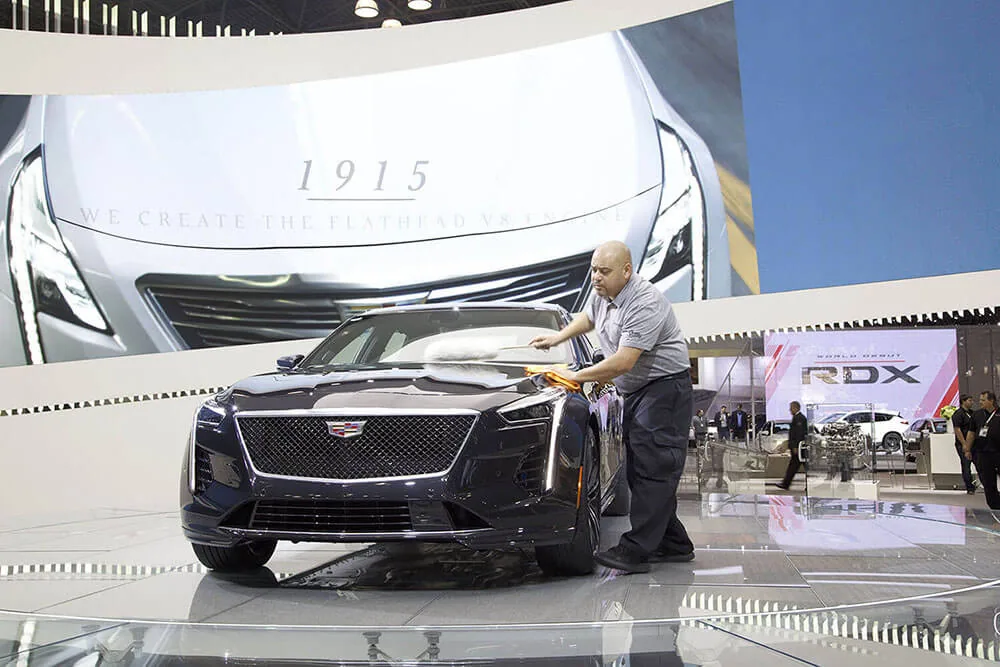
The 2026 LA Auto Show opened to the public on November 20 at the Los Angeles Convention Center, and runs through November 29. November 19 was AutoMobility LA, the industry and media day, when vehicles were judged by cameras. Opening day they are judged by crowds. That is a very different kind of pressure, and it shows up on paint, glass, seats and screens within the first hour.
ShowFleet has supported auto shows and vehicle events since 1986 from its headquarters in Santa Ana, in Orange County, within driving distance of the convention center. This post explains what an experienced floor crew watches for on opening day, and how OEM and agency teams can plan LA Auto Show vehicle detailing so day one does not undo the press day finish.
Before doors open: the morning walk
The first job of opening day happens before the public arrives. Press day leaves its own marks: fingerprints from interviews, smudges on screens, dust from overnight HVAC and stand lighting, and the odd item left in a door pocket.
A morning walk should cover:
- Every vehicle against the floor plan. Confirm each unit is on its mark, doors and hoods are set the way the display manager wants, and nothing moved overnight.
- Glass and screens. Windshields, side glass, infotainment screens and digital clusters get cleaned first, because they show smudges most clearly.
- Dust on horizontal panels. Roof, hood and trunk lid collect a fine layer overnight. A light dusting under the stand lighting brings back the press day look.
- Interiors and footwells. Remove anything left behind on press day and wipe touch points.
- Tires and wheels. Check dressing and wipe any carpet fibers off the lower panels.
- Keys and security. Confirm keys are logged and stored as agreed, and note anything from overnight security. See Inspections.
The first rush: what changes when the public arrives
Consumer shows invite people to touch. Visitors open doors, sit in seats, grab steering wheels, tap screens and lean on fenders for photos. On a hero vehicle, a full interior can need attention within the first hour.
What a floor crew watches for during the opening hours:
- Fingerprints on door handles, pillars and glass, especially on dark paint and around the driver door.
- Smudged screens and touch controls, which are photographed by visitors and look worn quickly.
- Seat bolsters and steering wheels, where skin oils and clothing leave visible marks on leather and suede.
- Footwell trash, such as wrappers, flyers and cups, which builds up fast in open door vehicles.
- Dust and debris on carpet and platforms, tracked in by foot traffic and visible around the vehicles.
- Small damage, such as a scuff from a bag, a ring scratch on a door handle cup or a chipped trim piece. Spotting it early means it can be checked against the vehicle's inspection report and reported the same day.
Running an hourly rotation
The core of opening day is a steady rotation. ShowFleet's Onsite Event Support service is built around hourly vehicle maintenance: each vehicle is refreshed on a set cycle, dusted, cleaned of fingerprints and marks, and cleared of trash.
A few practical rules make the rotation work:
- Size the crew to the stand. The number of vehicles, how many have open doors and how busy the stand is should set crew size and rotation frequency.
- Prioritize hero units. Reveal vehicles and anything featured in press coverage get attention more often than the rest.
- Work around visitors, not through them. A good crew refreshes a vehicle between groups without blocking the experience or rushing guests out.
- Watch the high touch zones between full passes. Screens, handles and steering wheels may need a quick wipe between scheduled rounds.
- Keep the whole stand clean. Floors, glass, displays and trash bins are part of the presentation. Exhibit cleaning and hourly trash removal belong in the same plan.
Our guide to hourly maintenance at consumer auto shows goes deeper on rotation planning.
Communication with the display team
On day one, the floor crew and the OEM or agency display manager should agree on a few things early:
- Who the crew reports to on the stand and how issues are flagged.
- Which vehicles stay locked or closed, and whether that changes during peak hours.
- Who can approve a repair if damage is found. Timing for any on-floor fix depends on venue rules and traffic.
- How the stand should look at close, so the nightly reset meets the same standard every day.
The first nightly reset
When doors close, the work does not stop. The first evening sets the pattern for the next nine days:
- Deeper interior cleaning on every vehicle, including vacuuming seats and carpets.
- Exterior refresh under the stand lighting to remove the day's fingerprints and dust.
- Floor care, vacuuming and shampooing where needed, plus trash out.
- A check against inspection reports so any new mark is documented and reported before the next morning.
- Key and security handoff for the overnight period.
Ten public days is a long run, and the show is open on Thanksgiving Day, November 26. A consistent reset each night is what keeps vehicles looking like press day on the final Sunday. When the show closes on November 29, the same crew can transition straight into Move-In and Move-Out so vehicles leave the floor clean and documented. Our LA Auto Show 2026 move in planning post covers the full timeline.
Frequently asked questions
When does the 2026 LA Auto Show open to the public?
The public show runs November 20 to 29, 2026 at the Los Angeles Convention Center, following AutoMobility LA, the industry and media day, on November 19.
Why is day one harder on display vehicles than press day?
Press day brings cameras, but day one brings the first large public crowds. Doors, seats, screens and steering wheels are touched far more often, so dust, fingerprints and footwell trash build up within hours.
How often should display vehicles be refreshed during public hours?
An hourly rotation on every vehicle is a good baseline for a busy consumer show, with extra attention on hero units, open door vehicles and touch screens.
What happens after doors close on day one?
The stand gets a full reset: deeper interior cleaning, floor care, trash removal and a check of every vehicle against its inspection report, so it is ready for the next morning.
Can ShowFleet repair minor damage found during the show?
Whether a fix can be done during the show depends on the damage, venue rules and the time available, so agree in advance who can approve repairs and ask how onsite support can help.
Keep your stand looking like press day
Whether you are on the floor at the LA Auto Show this week or planning your next consumer show, ShowFleet can handle detailing, hourly maintenance, exhibit cleaning, inspections, key management and move out. Tell us the event, dates, venue and vehicle count, then Request a Quote or email dylan.price@showfleet.com.
Related: Vehicle Detailing · Onsite Event Support · Auto Shows · Experiential Agencies and Event Producers
Source for dates: Los Angeles Convention Center event page