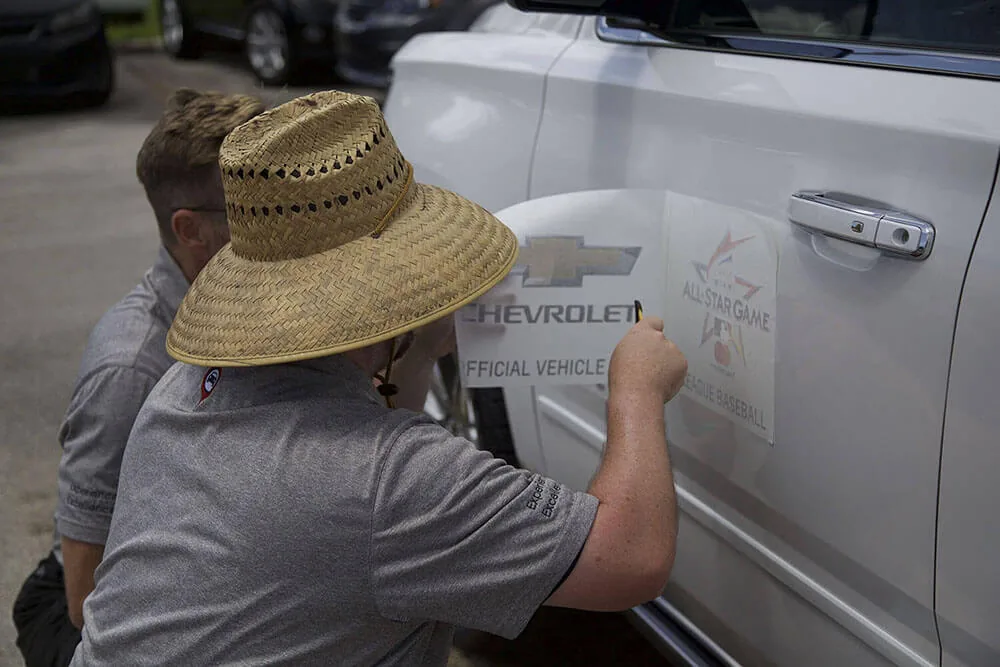
A ride and drive fleet in sponsor colors, a launch tour vehicle, or a courtesy car at a sporting event carries the brand into every photo and every mile.
The wrap itself is rarely the hard part. The calendar is. Miss one step and the wrap either is not ready for move in or leaves a problem behind afterward.
ShowFleet has supported vehicle events since 1986 and offers vehicle graphics and wraps for events. This guide walks agencies and sponsors through a realistic install and removal timeline, working backward from the day vehicles need to be on the floor or on the road. Confirm design, production, install and removal scope for your project when you request a quote.
Start with the date that cannot move
Every wrap plan should begin with the first moment a vehicle must look finished. For an auto show, that is usually move in or press day. For a ride and drive, it is the first guest drive. For a tour, it is the first stop.
Work backward from that date through each stage below. Durations depend on vehicle count, design complexity and materials, so treat the sequence as fixed and confirm durations with your vendor.
Stage 1: Vehicle list and design
Graphics are cut to fit each model, so design cannot be final until the vehicle list is. Share these details as early as possible:
- Make, model, model year and trim for every vehicle, since body lines and trim pieces change between versions.
- Brand guidelines and artwork, including logos, colors and any legal or sponsor copy.
- Coverage level, whether a full wrap, a partial wrap, or decals and spot graphics.
- Where the vehicles will be used, indoors on a show floor, outdoors, or driven on public roads.
If a trim swap is possible, flag it early so the design can allow for it.
Stage 2: Production
Once artwork is approved for each model, graphics are produced. Printed vinyl is commonly laminated for protection, and film manufacturers such as 3M and Avery Dennison publish guidance on letting printed film dry properly before it is laminated and installed. Building that drying time into the schedule helps avoid edge lifting and adhesion problems later.
Many films are designed specifically for clean removal after a set period, so ask which film is being used and how it is rated for removal.
Stage 3: Surface prep and installation
A wrap only sticks as well as the surface beneath it allows. Before installation, vehicles are typically washed and the surface cleaned of wax, sealant and residue, following the film manufacturer's instructions. New vehicles also arrive with protective plastics, and ShowFleet removes Kansai wrap and factory plastics on delivery so nothing is left at the edges.
Graphics are typically installed at a staging area before move in. Installing at staging rather than on the show floor has real advantages:
- Controlled conditions. Film manufacturers specify temperature ranges for installation, which are easier to manage indoors than in a loading dock or parking lot.
- No venue clock. Move in windows are short and better spent on placement and detailing.
- Room to fix problems. If a panel needs to be redone, there is time to redo it.
Some vehicles also need accessories added or removed to complete the look. From a rear bumper to a hubcap, ShowFleet installs or removes accessories needed for the event and creates, installs and dismantles show license plates.
Stage 4: Detail and inspection
After installation, each vehicle gets a full detail and a final check under good light. This is the moment to catch bubbles, lifted edges, or misaligned panels, while fixes are still simple.
ShowFleet also emails pre and post show inspection reports, giving the agency, sponsor and fleet owner a shared record of condition before the program, which matters when graphics come off.
Stage 5: Keeping graphics clean during the program
Wrapped vehicles need different care than painted ones. Many film manufacturers advise against certain cleaning methods and chemicals on wrapped surfaces, so the crew should follow the film's care guidance during the event.
For ride and drive fleets driven on public roads, ShowFleet recommends checking graphics daily so any lifting edge is fixed before it becomes visible damage. On a show floor, the onsite event support crew keeps wrapped vehicles clean along with the rest of the stand. Our guide to ride and drive vehicle logistics covers how vehicles are refreshed between drive sessions.
Stage 6: Removal and return to stock
Removal is where planning pays off. At the end of the program, ShowFleet removes graphics and event accessories, reinstalls factory parts that were taken off, and completes a post event inspection so vehicles go back to the fleet in stock condition. Every removal is checked under good light before the vehicle is released.
A few things help removal go smoothly:
- Schedule it. Removal takes crew time. Book it in the plan instead of assuming vehicles can leave wrapped and be handled later.
- Know the film. Removable films are designed to come off within a rated window. Leaving graphics on far longer than planned can make removal harder.
- Compare against the intake report. The pre program inspection shows what was already there, so any question about paint condition can be answered with records instead of memory.
- Plan the next step. If vehicles go straight to another event or a press fleet, coordinate removal with logistics.
Frequently asked questions
How far ahead should we plan event vehicle wraps?
As soon as the vehicle list and event date are known. Graphics are cut to each model, so the vehicle list drives everything else. Confirm the production lead time with your vendor before committing to a date.
Can wraps be installed on the show floor?
It is usually better to install at a staging area before move in, where conditions are controlled and there is time to fix any issue before the vehicle reaches the venue.
Will removing a wrap damage the paint?
Film manufacturers design many products for clean removal on factory paint. After the event, graphics can be removed, each vehicle inspected under good light, and condition documented with pre and post show inspection reports.
Do you also handle accessories and show plates?
Yes. ShowFleet installs or removes accessories needed at an event, from a rear bumper to a hubcap, and creates, installs and dismantles show license plates.
Request a Quote
Branding vehicles for an auto show, ride and drive, tour or sporting event? Tell us the event, dates, city and venue, vehicle list, and the coverage you have in mind, and we will build a timeline from design through removal. Request a Quote or email dylan.price@showfleet.com.
Related: Graphics · Vehicle Detailing · Inspections · Experiential and Ad Agencies