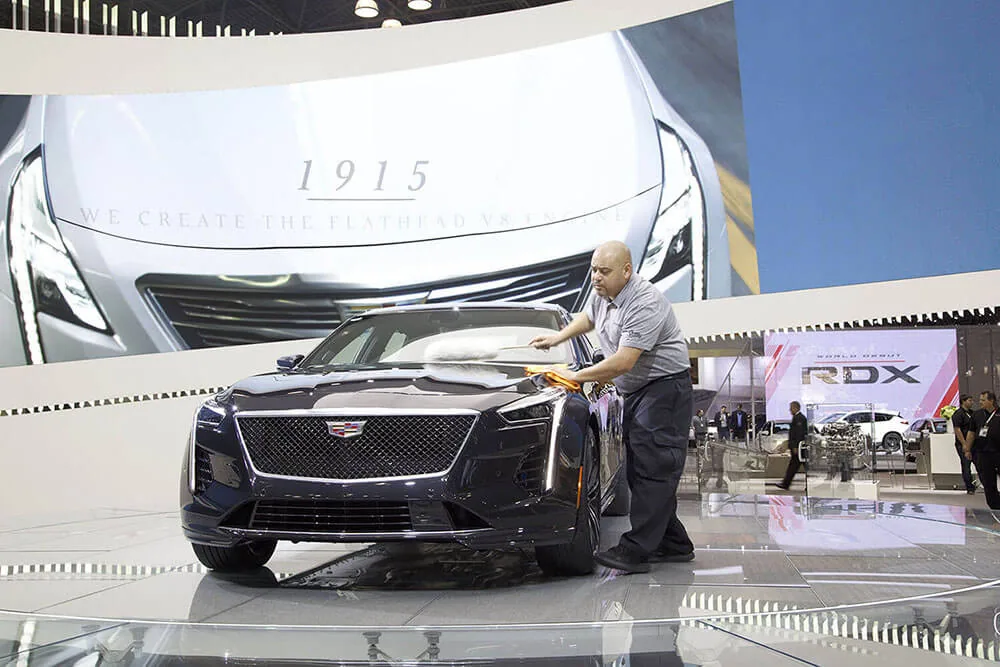
The SEMA Show runs November 3 to 6, 2026 at the Las Vegas Convention Center. It is a trade only event, with the public admitted on Friday, November 6 only. For exhibitors, that means three days of buyers, media and industry looking at your builds from inches away, then a public day with heavier crowds, then a fast move out.
If your booth includes a vehicle, it is almost certainly the most photographed thing you brought. This checklist is how we think about show vehicles at ShowFleet, built from working auto shows and events since ShowFleet was established in 1986. Use it for SEMA this week and for every show after it.
Before the vehicle leaves your shop
- Read the current exhibitor manual. Fuel level limits, battery rules and vehicle move in times are set by the venue and show management and can change year to year. Do not rely on last year's notes.
- Document condition. Photograph every panel, wheel and interior surface, or have your vehicle vendor produce a pre show inspection report. Transport is where most show damage happens, and you want proof of the starting point.
- Choose the right carrier. One off builds and high value vehicles usually belong in an enclosed carrier. Book early, because Las Vegas in show week is busy.
- Pack the plate, the keys and the parts list. Tag each key with make, model, color and the last 4 of the VIN. List every removable accessory.
On arrival in Las Vegas
- Inspect again. Compare to your departure photos before the vehicle goes into the hall.
- Remove protective plastics. Builds that ship wrapped need all plastic and tape removed cleanly, including edges and trim gaps.
- Prepare for the hall. Most convention centers set a maximum fuel level before vehicles can enter. Bring the fuel down to the limit, seal the gas cap with a lock or tape, and disconnect and tape the battery cables so the vehicle cannot start or roll during the show.
- Secure the small parts. Badges, center caps, shift knobs and similar pieces walk away at busy shows. Remove what can be removed, bag and label it, and keep it secured until move out.
Placement and the final detail
Vehicles go in according to your floor plan, often while your booth is still being finished. Once the vehicle is on its mark, do the final detail under the actual show lighting, not in the marshalling yard. Exhibit lighting shows swirls, haze and dust that daylight hides. If the paint needs it, a 2 step correction and polish before the show makes a visible difference on dark colors and wraps.
Check the interior from the angles visitors will use: the open driver door, the rear seat, and the view through the windshield from the front of the stand. Clean every screen and touch surface last.
During the show
SEMA traffic is heavy and close. Plan for:
- Hourly refresh. Dusting, fingerprint and smudge removal on paint, glass, chrome and screens, plus trash out of footwells and cargo areas.
- Morning reset. Before doors open each day, do a deeper wipe down and floor clean so the booth starts fresh.
- Security after hours. Know who is watching the vehicle overnight and how keys are controlled.
- Public day. Friday brings a different crowd. Increase the refresh rate and keep an eye on small parts.
If a mark or ding appears during the show, mobile dent, paint and glass repair can often fix it after close so the vehicle is back to standard the next morning.
Move out
Move out at a show like SEMA is compressed and crowded. Have a sequence ready:
- Reinstall secured accessories and plates.
- Reconnect the battery and unseal the gas cap.
- Add fuel if the vehicle needs to drive to the carrier.
- Complete a post show inspection and compare it to the pre show report.
- Hand keys and paperwork to the carrier, then confirm delivery at the other end.
A quick SEMA checklist you can print
- Exhibitor manual read, fuel and battery rules confirmed
- Pre show photos or inspection report done
- Carrier booked, enclosed for high value builds
- Keys tagged with make, model, color and last 4 of VIN
- Removable parts listed, bagged and labeled
- Protective plastics removed
- Fuel at limit, gas cap sealed, battery disconnected and taped
- Final detail under show lighting
- Hourly refresh and daily reset plan
- Overnight security and key control confirmed
- Move out sequence and post show inspection planned
Frequently asked questions
When is the SEMA Show 2026?
November 3 to 6, 2026 at the Las Vegas Convention Center. It is trade only, and open to the public on Friday, November 6 only. Future dates published by SEMA are November 2 to 5, 2027.
Do vehicles need to be defueled for the SEMA Show?
Most convention centers set a fuel level limit for vehicles in the building. Check the current SEMA exhibitor manual for the exact rule for your booth.
Should I disconnect the battery on a display vehicle?
Disconnecting and taping battery cables prevents the vehicle from starting or rolling during the show. If your display needs power, plan an approach with show management in advance.
How often should a show vehicle be cleaned during the day?
At a busy show, an hourly refresh of paint, glass, screens and interior is a good baseline, with a deeper reset each morning.
Can ShowFleet support my SEMA booth?
ShowFleet is an Official Detailer of the SEMA Show, and our services include vehicle detailing, receiving, inspections, logistics, staging, move in and move out, accessory installation and removal, graphics, power packs, exhibit cleaning, janitorial services and onsite event support. Email info@showfleet.com(949) 460-0314 or request a quote.
Plan your next show
Every vehicle show ready, every event. If you are planning SEMA 2027, the LA Auto Show or a 2027 auto show season, request a quote and tell us your event, dates, venue and vehicle count.
Related: Vehicle Detailing · Move-In and Move-Out · Onsite Event Support
Source for dates: semashow.com