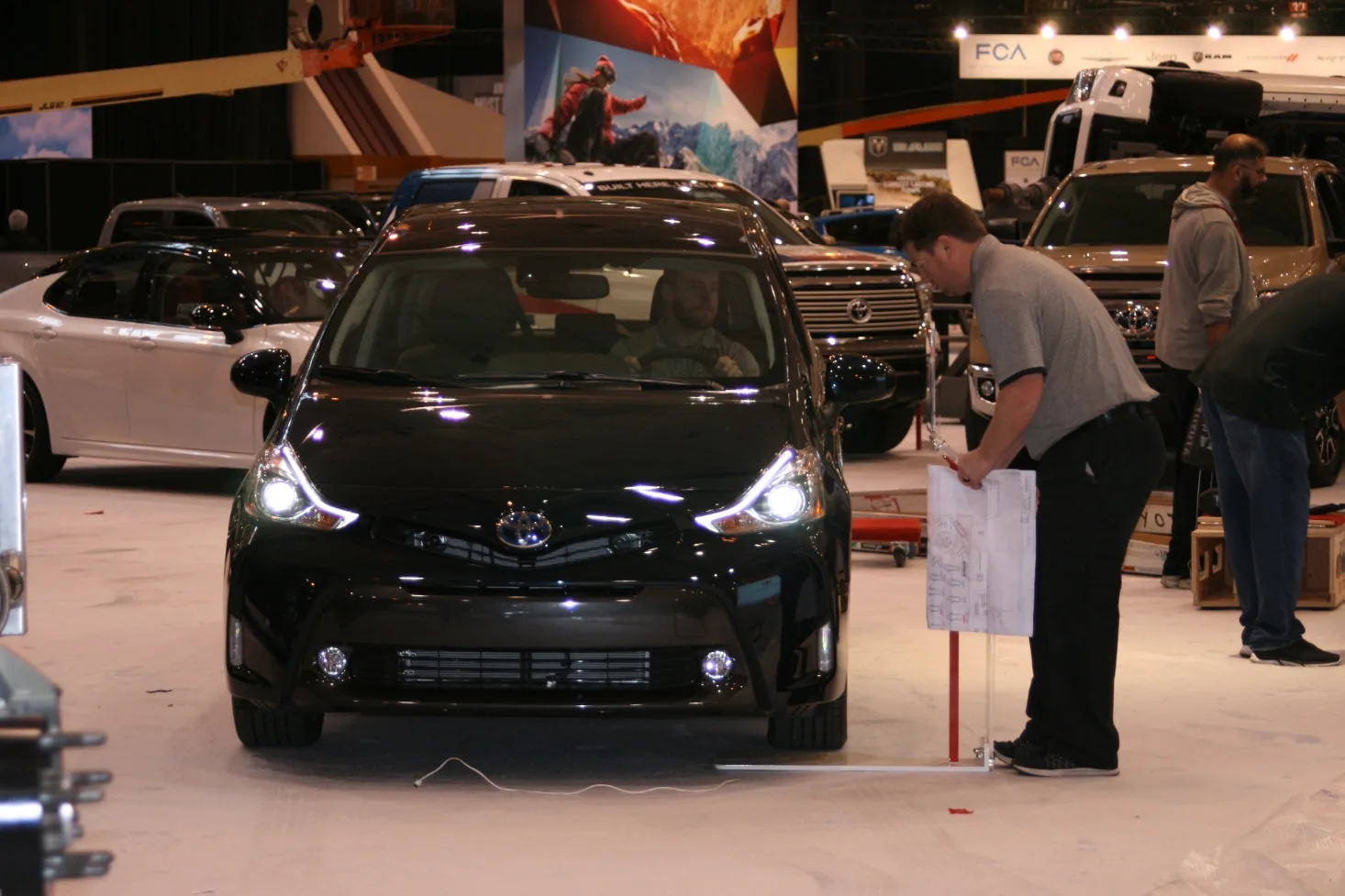
A display vehicle almost never rolls off a carrier and straight onto the show floor. Venues set move in windows, exhibit builds run on their own schedule, and carriers arrive when the road allows. In between, every vehicle needs a safe place to wait. That waiting period is easy to overlook in a plan, and it is often where small problems either get caught or get carried into the hall.
ShowFleet has supported vehicle events since 1986, and our logistics work covers this step: we coordinate and lease locations close to the venue in most cities, with enclosed and outdoor housing for vehicles prior to delivery to the exhibit or event. This guide is for exhibit houses and agencies working out where their vehicles will sit, and what should happen to them while they do.
Why vehicles need a holding area at all
There are three common reasons a vehicle cannot go directly to the floor.
- The venue is not ready. Convention centers schedule move in by exhibit and by time slot. Vehicles that arrive early have nowhere to go inside.
- The exhibit is not ready. Flooring, platforms, turntables, and lighting usually go in before vehicles. Putting a car on an unfinished stand invites damage.
- The vehicle is not ready. A unit that traveled on an open carrier needs a wash and detail. A unit that arrived with a scratch needs a repair decision before anyone sees it.
A holding area near the venue absorbs all three timing gaps.
Enclosed vs outdoor housing
ShowFleet coordinates both enclosed and outdoor housing. The right choice depends on the vehicle, not just the budget.
Enclosed housing keeps vehicles out of weather and out of public view. It is the better fit for concept cars, pre production units, embargoed reveal vehicles, and anything that has already received a show car detail or paint correction. If a vehicle is meant to be seen for the first time on press day, it should wait indoors.
Outdoor housing can work for production display units, ride and drive cars, and durable vehicles that will be detailed again before move in. It also helps when a fleet is large and enclosed space is limited. Outdoor lots still need controlled access and a clear plan for weather and debris.
Many programs use both: enclosed space for the hero vehicles and outdoor space for everything else.
What should happen while vehicles wait
Storage time is prep time. A well run holding area is where the crew turns a shipped vehicle into a show vehicle.
- Arrival inspection. Document condition the moment the vehicle comes off the carrier. A pre show inspection separates transport damage from anything that happens later.
- Key tagging and logging. Every key gets tagged and tracked before the vehicle moves again.
- De contenting. Removable accessories and loose items are removed and logged so they do not walk away on the floor.
- Wash and detail. Vehicles that came in dirty get cleaned in staging, not under exhibit lighting with the clock running.
- Repairs if needed. Small dents, chips, or glass issues can be addressed before move in. See Onsite Event Support.
- Show floor compliance. Venue rules commonly require reduced fuel, sealed gas caps, and disconnected or taped batteries. Plan that prep as part of move in. Always confirm the specific venue's fire marshal requirements for your show.
When all of that happens in staging, the vehicle that goes into the hall is already inspected, clean, logged, and compliant.
Location matters
The closer the holding area is to the venue, the easier the move in day. Short drives mean less road grime after the final detail, faster swaps if a unit has a problem, and more flexibility when the venue shifts a move in slot.
For the 2026 LA Auto Show, which runs November 20 to 29 at the Los Angeles Convention Center, with AutoMobility LA for industry and media on November 19, ShowFleet's headquarters in Santa Ana, in Orange County, is within driving distance of downtown Los Angeles. For shows in other cities, we coordinate housing near that venue so vehicles are not driven long distances after prep.
Security and accountability
A vehicle in storage is still your responsibility, and your client's. Before you commit to a holding area, ask:
- Who has access, and how is it controlled?
- Is the location monitored around the clock?
- How are keys stored and signed out?
- Is condition documented at arrival and again at departure?
- What insurance covers vehicles while they are in storage?
Clear answers to these questions protect everyone if something goes wrong.
After the show closes
Storage is not just a move in problem. When a show closes, vehicles come off the floor faster than carriers can always load them. A holding area gives the crew a place to run a post show inspection, reconnect batteries, return accessories, and stage vehicles for carriers heading home or to the next event. See Move-In and Move-Out. For multi city tours, planning housing at every stop keeps vehicles out of public lots between shows.
Frequently asked questions
Where are display vehicles stored before an auto show?
Usually at a secure holding location near the venue. ShowFleet coordinates and leases locations close to the venue in most cities, with enclosed and outdoor housing, before vehicles are delivered to the exhibit.
Should concept or embargoed vehicles be stored indoors?
Yes, in most cases. Enclosed housing protects the finish and keeps the vehicle out of public view until the reveal.
What prep happens while vehicles are in storage?
Typically an arrival inspection, key tagging, de contenting, wash and detail, any needed repairs, and show floor compliance steps such as reduced fuel, sealed gas caps, and taped batteries.
How early should vehicles arrive at the holding area?
Early enough to finish inspection, detail, and any repairs before your move in slot. The right lead time depends on the fleet size and the show.
Can vehicles be stored after the show closes?
Yes. Post show storage gives the crew time to inspect vehicles and stage them for carriers going home or to the next event.
Request a Quote
Send us your show, city, dates, move in window, and vehicle list with VINs, noting which units are concept, pre production, or under embargo. We will recommend enclosed or outdoor housing for each vehicle and build inspection, detail, and move in around it. Request a Quote or email info@showfleet.com(949) 460-0314.
Related: Logistics · Inspections · Experiential Agencies and Event Producers
Source for LA Auto Show dates: Los Angeles Convention Center event page