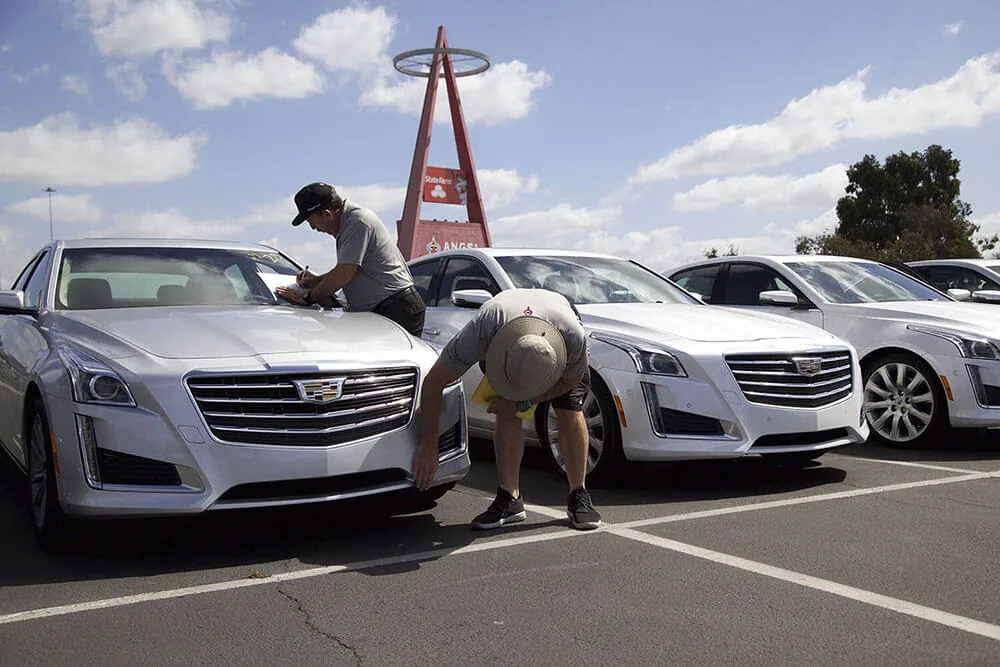
A consumer auto show puts high value vehicles in front of large public crowds for days at a time. Most visitors look, sit, and move on. A few want a souvenir. Badges, valve stem caps, floor mats, owner's manuals, key fobs, and small trim pieces can walk off a stand without anyone noticing until move out. That is why accessory de contenting belongs alongside inspections and accessory installation and removal as part of protecting an event fleet.
Here is what vehicle de contenting at an auto show involves and how every part gets back to the right vehicle.
What de contenting means for a display vehicle
De contenting is the removal of parts and pieces that could be taken or damaged during an event. Removed items are bagged, labeled, and secured, then reinstalled at the end of the event.
The goal is not to strip the vehicle. A display unit still has to look complete under exhibit lighting. The goal is to remove what is small, valuable, easy to pocket, and not essential to how the car presents on the floor. Everything else stays on and stays under watch.
Items teams commonly consider removing
Every OEM and agency sets its own list, and it often depends on the model, the trim, and how open the vehicle is to the public. Items that commonly come up in planning include:
- Loose interior items. Owner's manuals, charging cables, cargo covers, removable organizers, and accessory floor mats.
- Spare keys and fobs. Only the keys needed for placement and maintenance should be near the floor. Spares stay tagged and stored. See our post on key management for event fleets.
- Small exterior pieces. Valve stem caps, removable antennas, and accessory items that clip or screw on.
- Branded accessories. Bolt on items from an accessory catalog that may be displayed separately or held until a press moment.
- License plates and plate frames. These are often removed or swapped for the run of the show.
Some items are better handled another way. Badges that are bonded to the body, for example, may be safer left in place and covered by security and floor staff rather than removed and reattached. That decision belongs in the brief, not on the dock.
How de contenting fits the inspection chain
De contenting only works if it is documented. A missing part found at move out raises one question: was it there at intake? ShowFleet pairs accessory removal with pre and post show inspections, which are computer generated reports emailed for each vehicle that record damage, marks, and missing accessories.
A clean sequence looks like this:
- Intake inspection. The vehicle is logged on arrival at staging, including any accessories already missing from the carrier.
- Removal. Agreed parts are removed carefully as part of accessory installation and removal.
- Bag and label. Removed parts are bagged and labeled so each piece is tied to its vehicle. Using the same make, model, color, and last 4 of the VIN standard used on key tags keeps the records aligned.
- Secure storage. Bags are held under control for the run of the show.
- Show coverage. De contenting reduces what can be taken, but the stand still needs security coverage while the floor is open.
- Reinstallation and post show report. Parts go back on the correct vehicle, and the post show inspection confirms the unit leaves as it arrived, or records any change.
When the intake report, the parts bag label, and the post show report all reference the same unit, disputes after the event become simple to settle. For more on what those reports should contain, see pre and post show inspection reports.
Timing: when to de content and when to reinstall
De contenting usually happens at staging or during move-in, after the vehicle has been inspected and before it is placed on the floor. Doing it at staging keeps loose parts away from a busy convention center dock.
Reinstallation needs its own window. On move out night, carriers are waiting and the floor is crowded. If parts must go back on before the vehicle loads, plan crew time for it. If the vehicle is heading to another show on a multi city tour, plan whether certain parts stay bagged and travel with the unit. The post show report from one event can then serve as the arrival reference at the next.
What to put in your brief
A clear scope saves time at intake and prevents guesswork. Include:
- Vehicle list with make, model, color, and VIN before arrival
- The parts you want removed, by model or by unit
- Any parts that must stay on for photography or press day
- Where removed parts should be stored and who can access them
- Whether parts are reinstalled at the venue, at a storage yard, or travel with the vehicle
- Your preferred format for the inspection report and parts log
Frequently asked questions
What is vehicle de contenting at an auto show?
It is the removal of parts and pieces that could be taken or damaged during the event. Removed items are bagged, labeled, and secured, then reinstalled at the end of the show.
Which parts are usually removed from display vehicles?
It depends on the model and how open the stand is. Common candidates are loose interior items, spare keys and fobs, small exterior pieces, and accessories that clip or bolt on. The final list should be agreed in the brief.
How do you make sure parts go back on the right vehicle?
Each bag is labeled to its vehicle, and the pre and post show inspection reports record missing accessories for every unit. Matching labels to the same make, model, color, and VIN record used for key tags keeps everything aligned.
Does de contenting replace show security?
No. It reduces what can be taken. Plan security coverage for the stand during the event as well.
Can ShowFleet reinstall accessories after the show?
Yes. Reinstallation at the end of the event is part of accessory installation and removal, and the post show inspection confirms each vehicle's condition before release.
Request a Quote
Tell us the event, dates, city and venue, vehicle count with VINs, and which parts you want protected. We can scope de contenting on its own or as part of a full plan with inspections, accessory removal, detailing, and move in and move out. Book an intro call, call (949) 460-0314, or email info@showfleet.com.
Related: Inspections · Accessory Installation and Removal · Move-In and Move-Out · Auto Shows