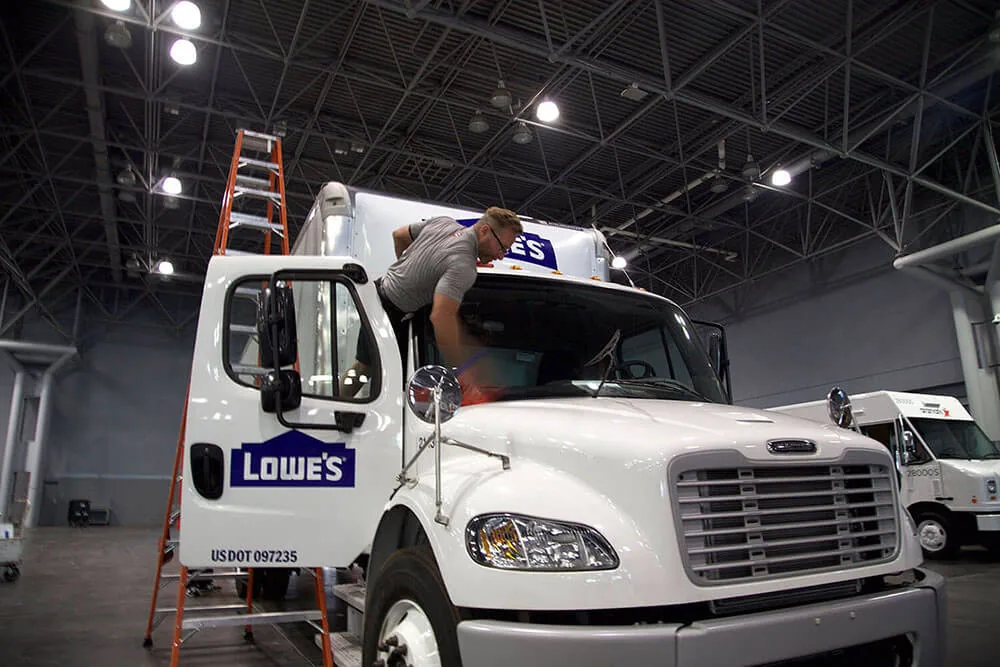
A fire apparatus on a trade show floor is not a car on a turntable. Visitors are fire chiefs, apparatus committee members, and firefighters who know these trucks inside and out. They open every compartment door, climb into the cab, look at the pump panel, and crouch down to study the chassis. A display rig has to hold up to that kind of close inspection all day.
Two of the biggest fire service events of 2027 are already on the calendar. FDIC International lists April 12 to 17, 2027 at the Indiana Convention Center and Lucas Oil Stadium in Indianapolis, with exhibit halls and outdoor exhibits open Thursday through Saturday, April 15 to 17. The International Association of Fire Chiefs lists Fire-Rescue International 2027 for August 18 to 20, 2027 at the Anaheim Convention Center in California.
ShowFleet has prepared vehicles and equipment for shows and events since 1986. Trucks and commercial vehicles are among the vehicle types we work with, and the specific scope is confirmed for each project. This guide is written for apparatus manufacturers, dealers, and exhibit teams planning trucks for the 2027 show season.
Why fire apparatus need their own prep plan
- Large painted and chrome surfaces. Deep, glossy body colors and bright metal show every swirl, water spot, and fingerprint under hall lighting.
- Many compartments. Roll up and hinged doors, shelves, trays, and mounted equipment all get opened and handled.
- Visible chassis. Buyers in this market look underneath. Road film on frame rails, axles, and wheel wells stands out on a clean carpet.
- Pump panels and controls. Gauges, labels, and valve handles are a focal point and collect fingerprints quickly.
- Height. Upper body panels, ladders, and light bars need ladders or lifts to reach safely.
Before the truck ships: off site prep
Do the heavy work before the apparatus leaves the plant or the dealer lot. A convention center floor is not the place for paint correction or long cure times.
- Wash and decontaminate the body. Remove road film and any residue from storage or final assembly.
- Correct the paint. Swirls and light scratches are far easier to address in a controlled space. Follow the builder's recommended products and process.
- Polish bright metal. Wheels, bumpers, rails, steps, and trim set the tone for the whole truck.
- Clean the chassis and wheel wells. Frame rails, axles, and the underside of the body should be as presentable as the paint.
- Detail every compartment. Wipe shelves and trays, clean door seals, and stage any equipment the display plan calls for.
- Detail the cab. Seats, dash, floor mats, and glass inside and out.
- Check graphics, striping, and lettering for lifting edges. See Graphics.
Document the condition of each truck before it ships, with photos of both sides, the front, the rear, the pump panel, and the cab. A clear record at shipping makes it easier to sort out transport damage later. Our Inspections service covers condition checks for show programs.
Arrival and move in
Every venue has its own rules for bringing large vehicles into the hall, staging them outside, and working around other exhibitors. Many convention centers also set rules for fuel levels and batteries in display vehicles. Get the current move in schedule and vehicle rules from show management for every show on your calendar, and share them with every vendor on the program. Our post on convention center vehicle fuel limits covers why those rules matter.
At move in, plan for:
- A condition check at unload, matching the photos taken at shipping.
- Tire and wheel cleaning before the truck is placed, so lot dirt does not end up on display carpet.
- Protection during booth build, since carpet, lighting, and signage often go in around the apparatus.
ShowFleet handles move-in and move-out, receiving, and staging for show programs.
The final detail before opening
The last pass should happen as close to opening as the schedule allows, after booth build is done and the dust has settled.
- Body and chrome: dust and fingerprints off paint and bright metal, with extra attention to the side that faces the main aisle.
- Compartments: doors cycled, shelves wiped, and equipment reset to the display plan.
- Pump panel: gauges, labels, and handles cleaned.
- Cab: glass, seats, and steps reset.
- Chassis: a final wipe of anything visible from the aisle.
See Vehicle Detailing for how we approach show level finishing.
Daily maintenance during exhibit days
Exhibit days are busy. FDIC lists exhibit hall hours that start as early as 9 a.m. and run until 5 or 5:30 p.m. on Thursday and Friday, with a shorter Saturday that ends at 1 p.m. Hours differ by hall and outdoor area, so check the official schedule for the space your truck is in.
A simple daily routine keeps every truck looking like it did on opening morning:
- Before doors open: full wipe of chrome, glass, steps, grab handles, and compartment doors.
- Midday: quick touch ups on fingerprints, the pump panel, and cab seats.
- After close: reset compartments and the cab, clear trash, and note any damage for the display manager.
Our Onsite Event Support crews handle this kind of daily upkeep, and Exhibit Cleaning and Janitorial Services can cover the booth around the trucks.
Move out
Move out is when display vehicles are most at risk. The hall fills with forklifts and carts, and everyone wants to leave at once. Do a final condition check before each truck rolls out, compare it to the move in record, and clean it before it heads to a customer delivery, a dealer lot, or the next show.
Frequently asked questions
When are FDIC International 2027 and Fire-Rescue International 2027?
FDIC International lists April 12 to 17, 2027 in Indianapolis, with exhibit halls open April 15 to 17. Fire-Rescue International 2027 is listed for August 18 to 20, 2027 at the Anaheim Convention Center.
Does ShowFleet detail fire trucks for trade shows?
Trucks and commercial vehicles are among the vehicle types ShowFleet works with. Tell us about your apparatus, show, and dates, and the specific scope is confirmed for each project.
What parts of a fire apparatus need the most attention at a show?
Compartment doors, steps, grab handles, the pump panel, and the cab get touched the most. Chrome and dark paint show fingerprints and dust quickly under show lighting.
Should paint correction happen at the show?
Heavy correction is best done before the truck ships, in a controlled space. At the show, the focus should be on light cleaning, dust removal, and keeping high touch areas fresh.
Can ShowFleet support shows outside California?
Yes. ShowFleet is based in Santa Ana, California and supports vehicle and equipment programs nationwide. For Fire-Rescue International in Anaheim, see our Los Angeles and Orange County page.
Request a Quote
Planning apparatus for the 2027 show season? Send us your truck list, show dates, and move in windows, and we will put together a prep and maintenance plan for your program. Request a Quote or email dylan.price@showfleet.com.
Related: Trade Shows and Expos · Boat Show Prep: Gelcoat, Glass and Teak on the Show Floor · Vehicle Detailing
Sources: FDIC International FAQs and event schedule (fdic.com) and IAFC Fire-Rescue International 2027 event page (iafc.org), accessed November 25, 2026; ShowFleet homepage and vehicle detailing page (showfleet.com).