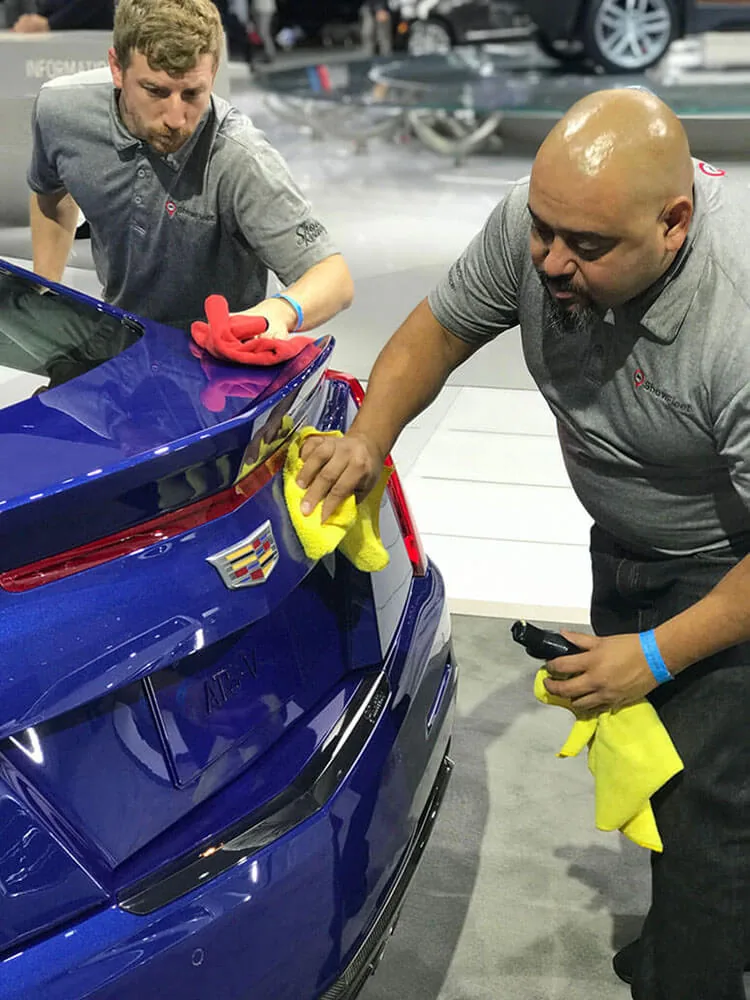
A display vehicle can travel a thousand miles without a mark and then pick up a door ding in the last fifty feet. A tie down strap rubs a fender on the carrier. A door swings into a booth wall during placement. A visitor's bag drags across a rear quarter panel on day two.
On a show floor, swapping the vehicle is rarely an option. The hero car is the hero car, and the replacement, if one exists, may be a state away. That is why mobile dent repair at an event matters so much to OEM auto show managers and exhibit houses.
ShowFleet has supported vehicle events since 1986. This guide explains what on site repair can realistically handle, where its limits are, and how to plan so small damage never becomes a missing vehicle.
The damage that actually happens at shows
Most show floor damage is small, and most of it happens during transport and placement rather than during the show itself. Common examples include:
- Door dings and small dents from placement in tight booths or contact with fixtures.
- Strap and transport marks on paint where a vehicle was secured on a carrier.
- Scuffs and light scratches from crew, visitors, bags, and stanchions.
- Swirls and haze that show up under bright exhibit lighting even on new paint.
- Chips in glass picked up on the road or during loading.
The good news is that these are exactly the kinds of problems that can often be fixed where the vehicle sits.
What on site repair can usually handle
Small dents and dings
Paintless dent repair is a widely used technique where a technician works the panel back into shape from behind or with glue pulling tools, without repainting. It generally works best on shallow dents where the paint is not cracked and the technician can reach the area. Because there is no paint to cure, it fits well into short windows between move in and opening. Ask whether this kind of work can be arranged for your event when you request a quote.
Paint scuffs and transport marks
Two-step paint correction is a two stage polishing process that removes swirls, haze and many surface marks. A lot of what looks like damage at intake is actually surface transfer or light marring that correction can remove. For deeper scratches, spot paint repair may be needed, and timing depends on the product and conditions.
Our earlier guide on paint correction for new cars before a reveal covers why even brand new paint often needs work before it goes under show lights.
Glass chips
A small chip in a windshield is very visible in a photo and very easy to miss at drop off, so catching it early gives the most options.
What on site repair usually cannot do
Honest limits help you plan. On site repair is designed for cosmetic problems. It is generally not the right fix for:
- Structural or collision damage that affects panels, frames, or safety systems.
- Large creased dents or cracked paint that need panel replacement or a full refinish in a booth.
- Broken glass as opposed to a repairable chip. Replacing a pane usually requires a specialist and more time than a short show window allows.
- Mechanical or electrical faults. Those belong with the OEM or a dealer.
When a repair is not possible on site, the most useful thing a vendor can do is say so immediately. That gives you time to arrange a replacement vehicle, turn the damaged side away from traffic, or adjust the stand layout while there is still time to act.
Why inspections come first
Repair works best when damage is found early. That is why ShowFleet ties repair to pre and post show inspection reports. A documented intake inspection does three things:
- Finds problems before the vehicle reaches the stand, when there is the most time to fix them.
- Records who is responsible, which matters if damage happened in transport.
- Creates a baseline so new damage during the show is clear and can be addressed after close.
ShowFleet lists inspections and key management as a service, and you can see how that works on the Inspections page.
How an on site repair typically flows
A typical on site repair at an event generally follows these steps:
- Find it. Damage is identified at intake or reported by your team during the show.
- Assess. The technician confirms whether it can be repaired on site and how long it will take.
- Approve. You approve the work, including scope and timing, before it starts.
- Repair. Work happens at staging or on the floor, outside show hours.
- Verify. The vehicle is detailed and rechecked under exhibit lighting.
Scheduling around show hours matters. Venues and producers often limit what can happen on the floor while the public is present, so most repair and correction work happens before doors open or after close. If a vehicle is damaged mid show, the onsite event support crew can flag it so the repair is booked for the next available window.
Planning tips for exhibit managers
- Build repair into the brief. Listing it up front means a technician can be scheduled, rather than searched for during move in.
- Allow time between delivery and opening. Even a few extra hours at staging creates room to fix what intake finds.
- Protect vehicles in transport. Many dings start on the carrier. Our guide to open vs enclosed carriers for show vehicles explains the tradeoffs.
- Keep a contact on call. Someone who can approve repairs quickly keeps small problems small.
Frequently asked questions
Can a dent be repaired on the show floor?
Often, yes. Small dents and dings are commonly repaired on site, outside show hours. Whether a specific dent can be fixed depends on its size, location, and whether the paint is damaged.
How long does on site paint repair take?
It depends on the damage. Light marks may only need paint correction, while spot paint repair takes longer. A technician can assess the damage and give a time estimate before work begins.
Can you fix a chipped windshield before a show?
A chip found at intake can often be addressed before opening if a glass technician is available. Confirm the options for your event when you request a quote.
What if the damage cannot be fixed on site?
You will be told right away, so you can arrange a replacement vehicle or adjust the stand while there is still time.
Request a Quote
Bringing vehicles to an auto show, trade show, or launch event? Tell us the event, dates, city and venue, vehicle count, and the services you need, and we will build a plan that includes inspection, detailing, and on site repair support. Request a Quote or email dylan.price@showfleet.com.
Related: Onsite Event Support · Vehicle Detailing · Auto Shows · Event Producers