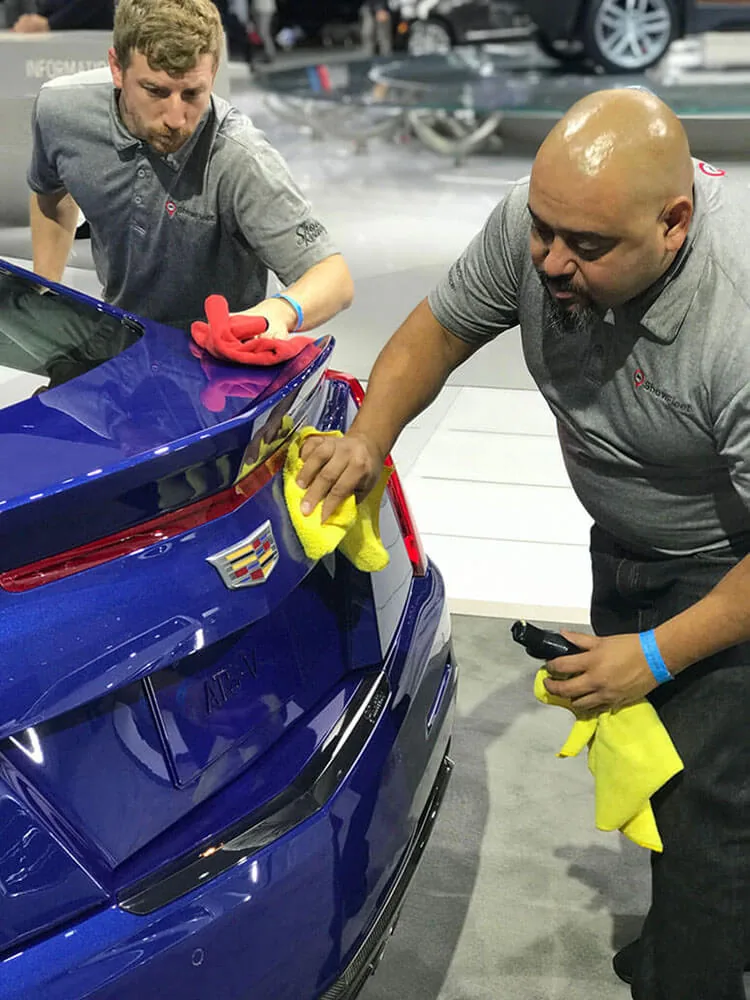
It is easy to assume a vehicle straight from the factory has perfect paint. It has never been driven, never been washed at a gas station, and never sat in a parking lot. Then it rolls onto a stand under exhibit lighting, a photographer leans in for a close shot, and the finish shows fine swirls, haze, or marks that nobody noticed on the dock.
That is why paint correction is part of ShowFleet's vehicle detailing service, and why it belongs in the plan for any reveal, press day, or launch. With AutoMobility LA on November 19 and the LA Auto Show opening to the public November 20, this is the week many display teams are locking in their prep schedules.
Where new car paint picks up flaws
A new vehicle travels a long way before it reaches a show floor. Every step is a chance for the finish to pick up something that will not read well under bright lights:
- Transport. Vehicles move by rail, truck, or carrier, sometimes across several legs. Dust, road film, and environmental fallout can settle on the paint along the way. For more on how the carrier choice affects condition, see open vs enclosed carrier for show vehicles.
- Protective wrap and plastics. New vehicles often arrive with protective film on paint and trim. Removing it is a normal part of show car detailing, and the edges and residue left behind need attention before a reveal.
- Handling and prep. A vehicle may be washed, wiped, moved, and staged several times before an event. Improper drying or wiping is a common source of fine scratches and swirls.
- Staging and storage. Time spent waiting near the venue adds dust and handling. Our post on where display vehicles wait before an auto show covers how staging is planned.
None of these are signs of a defective car. They are the normal result of moving a vehicle from the plant to the stand. A regular wash removes loose dirt but does not remove swirls or haze in the clear coat.
Why exhibit lighting changes the standard
On a dealer lot or in a driveway, minor swirls are hard to see. On a show stand, the lighting is designed to make the vehicle pop, and it also makes every flaw in the finish easier to see. Dark colors and metallic finishes tend to show swirls most clearly under direct light.
Press day raises the stakes further. The photos and video captured at an industry and media preview can be used online long after the show ends. A finish that looks fine from ten feet away may not hold up in a close up of a hood line or a badge.
What paint correction does
Paint correction is machine polishing that refines the clear coat to reduce or remove surface flaws such as swirls, haze, and light marring. It is different from a wax or a sealant, which add a layer on top of the paint. Correction works on the surface itself, so the reflection becomes cleaner and deeper.
Show car detailing often includes a 2 step paint correction and polish. In general detailing practice, a 2 step process uses a cutting stage to address defects followed by a finishing polish to restore clarity and gloss. We think of that correction as turning gems into diamonds.
Correction is not a fix for everything. Deeper scratches, chips, or dents may need repair rather than polishing. If a unit needs more than correction, ask about onsite support so it can still make the stand. See Onsite Event Support. Availability depends on the venue and the damage.
When to schedule paint correction
Timing matters as much as technique. A practical sequence looks like this:
- Inspect on arrival. Each vehicle gets a pre show inspection report that documents existing marks before any work starts. See pre and post show inspection reports.
- Remove protective plastics. Film and plastics come off so the full finish can be assessed.
- Correct at staging. Paint correction is best done in a controlled staging or housing area before move-in, not on a busy show floor.
- Place and detail. After the vehicle is on the floor plan, a final detail happens under the actual stand lighting.
- Final reveal pass. A last touch up right before media arrive or doors open, coordinated with the exhibit team.
- Maintain through the show. Onsite event support keeps the corrected finish clean through public days.
Building correction time into the schedule early keeps it from being squeezed into the night before press day. For the full picture of what a detail covers, read what a show car detail includes.
What to include in your brief
To scope paint correction accurately, share:
- Vehicle list with make, model, color, and VIN
- Which units are hero, press, or reveal vehicles
- Arrival dates and where vehicles will be staged
- Any wrapped, matte, or specialty finishes that need special handling
- The date and time each vehicle must be stand ready
- Who on your team approves work if a repair is needed beyond correction
Frequently asked questions
Do brand new cars really need paint correction?
Often, yes. New vehicles can pick up swirls, haze, and marks during transport, wrap removal, handling, and staging. These are easy to miss in normal light but stand out under exhibit lighting and in press photos.
What is the difference between paint correction and a regular detail?
A detail cleans and protects the vehicle. Paint correction is machine polishing that refines the clear coat to reduce swirls and haze. ShowFleet's show car detailing often includes a 2 step paint correction and polish.
When should paint correction happen before an auto show?
Ideally at staging, after the arrival inspection and protective plastic removal, and before move in. A final detail then happens after placement under the stand lighting.
Can paint correction fix scratches and dents?
Polishing can reduce light marring and fine scratches. Deeper damage may need repair. Ask about onsite support for those cases. See Onsite Event Support.
Does ShowFleet correct paint on vehicles other than cars?
ShowFleet details cars, trucks, boats, RVs, trains, aircraft, construction equipment and commercial vehicles. Ask about correction for your specific vehicle type.
Request a Quote
Planning a reveal, press day, or auto show stand? Tell us the event, dates, city and venue, vehicle count with VINs, and which units are your hero vehicles. We will build a plan covering inspection, wrap removal, paint correction, final detail, and maintenance through the show. Book an intro call, call (949) 460-0314, or email info@showfleet.com.
Related: Vehicle Detailing · Onsite Event Support · Auto Shows
Source for LA Auto Show dates: Los Angeles Convention Center event page